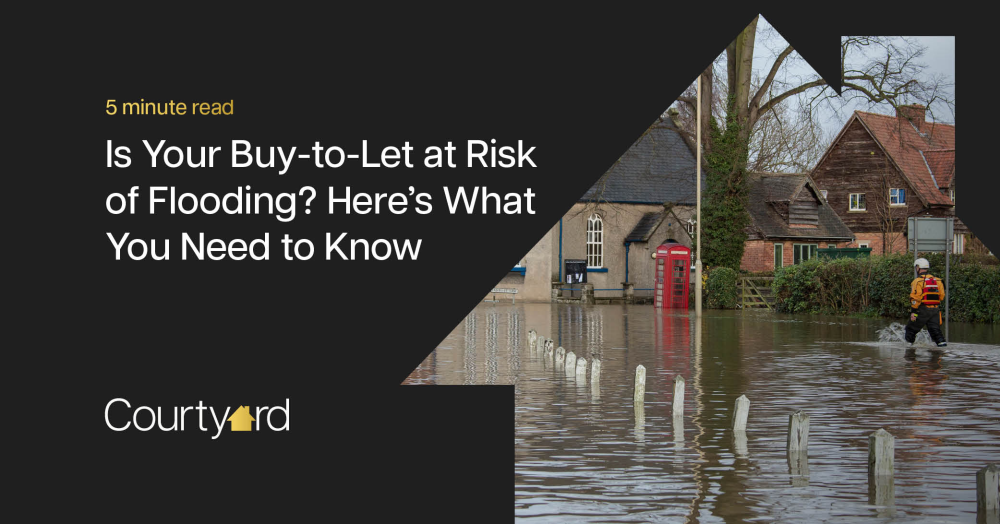
Summer Flood Risk Advice for Warrington Landlords
Over a third of home insurance flood claims occur between June and August, according to insurer Aviva.* Here’s how landlords can prepare for the risk of flooding.
Many people associate flooding with the colder seasons, but changing weather patterns mean it’s time to think again.
Jason Storah, CEO of UK and Ireland General Insurance at Aviva, explains: “Traditionally, we think of floods happening in the autumn and winter, when rainfall occurs over a period of time and rivers reach capacity.
“However, analysis shows that floods can and do occur at any time and summer flash floods are becoming more commonplace.
“This pattern of flood claims suggests that residents and businesses should be prepared for floods at any point during the year and put in place a flood action plan.”
Know your property’s flood risk
Assess your property’s flood risk on the official Government website here: Check long-term flood risk.
Remember that apartments can be affected as well. Flats can be cut off by flood water, and underground car parks and storage rooms are at high risk.
Make your property more flood resilient
If you’re refurbishing a buy-to-let in a flood-risk area, try to make it more flood-resistant.
Tiled solid floors are better than carpeted or timber floors.
Electrical wiring, sockets and heaters can be located above the likely flood level.
Consider installing flood barriers to external doors and anti-flood air bricks.
Sign up for local flood warning schemes
Areas with enhanced flood risk often have a local flood warning scheme.
The schemes will send you an email or text when the flood risk is high so that you and your tenant can take precautions.
Brief your tenant
If a property has a flood risk, you should inform prospective tenants when it goes up for let. It won’t necessarily deter them – flood-risk properties are often in sought-after locations and waterfront positions – but they need to know.
Give your tenant details of the local flood warning scheme, council emergency numbers, plus your (or your letting agent’s) emergency contact details.
Make sure you have adequate insurance
Check that your landlord insurance provides good coverage for flood damage and that the flood excess is reasonable.
You might also consider a policy that will pay for alternative accommodation for tenants as well as loss of your rental income if your property is flooded.
The Government recently announced that it will spend £7.9 billion on new flood defences over the next decade. But, in the meantime, don’t leave things to chance.
If you know somebody who might find this article helpful, please feel free to share it.
* Source: Aviva